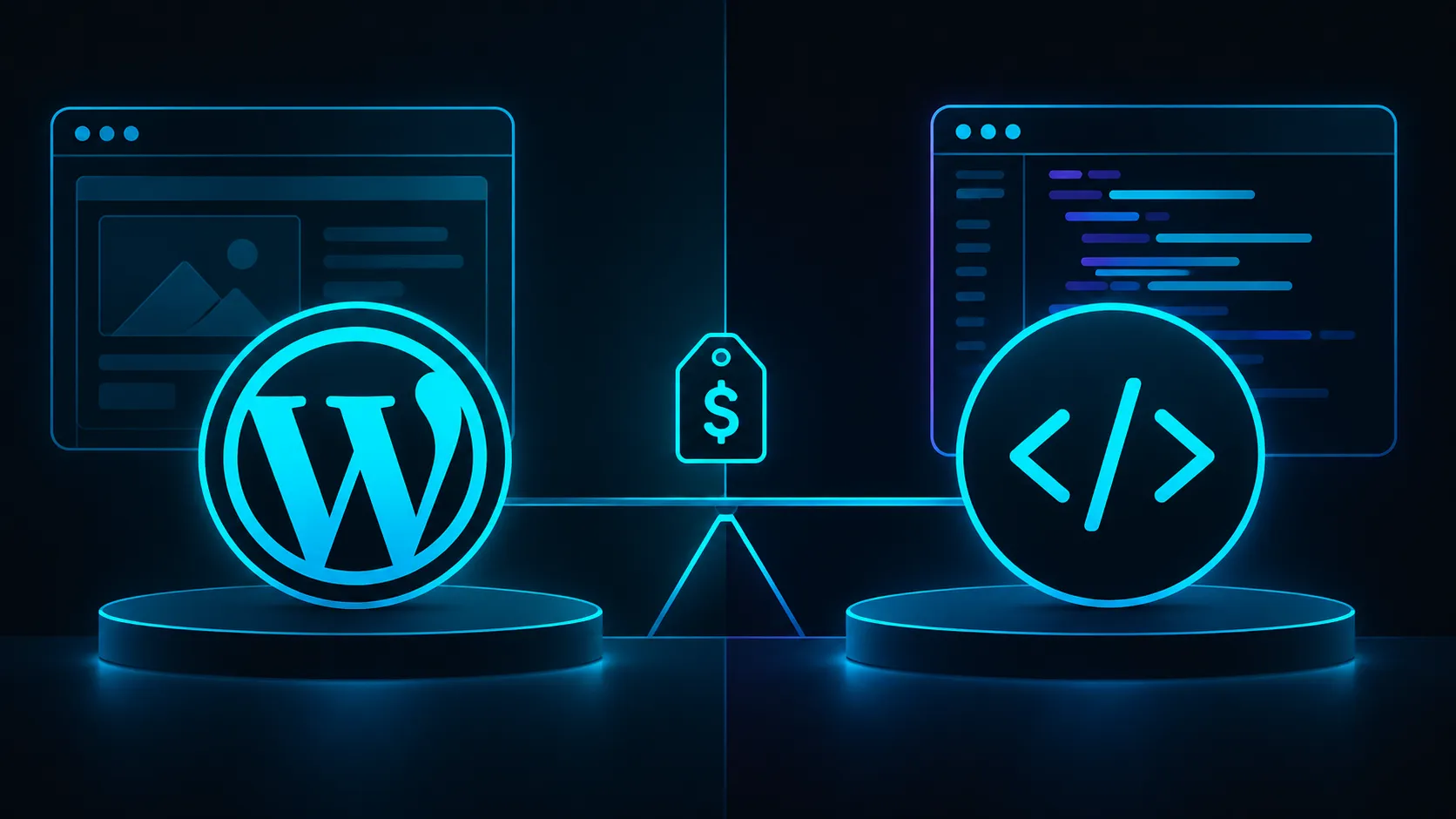
Upfront Price: WordPress Is Usually Cheaper
If you only look at the first number, WordPress almost always wins. Why?
- Plenty of ready-made themes, often free or low-cost
- Ready plugins exist for most needs (contact forms, stores, booking)
- Shorter build time since you’re not starting from scratch
For a simple presentation site with an urgent timeline and limited budget, this can be a reasonable choice.
But the “Upfront Price” Isn’t the Whole Story
This is where many people get caught off guard. The real cost of WordPress over time includes things you don’t see in that first quote:
- Premium plugin costs: free plugins are often limited; their pro versions usually come with annual subscriptions
- Maintenance and update costs: WordPress and its plugins need regular updates, or security risk climbs
- Heavier hosting costs: WordPress sites tend to be slower and heavier than static sites, requiring stronger hosting
- Plugin conflict fixes: every update carries a chance of plugin conflicts that need technical fixes
Custom Code: Higher Upfront Cost, Lower Maintenance Cost
Custom development (with modern frameworks like Astro, React, or Next.js) usually has a higher upfront cost, because:
- Coding from scratch takes more time
- Every part of the site is built specifically for that project, not pulled from a template
But in exchange for that upfront cost, you usually get:
- Faster load times — no bloated plugin code
- Better security — a smaller attack surface than widely-used off-the-shelf systems
- Lower hosting costs — modern static sites are often hostable on free or cheap platforms
- No plugin subscription costs
How Going Multilingual Affects the Price
If your site needs to support multiple languages (say, Persian and English), this adds cost to both options, but differently:
- On WordPress: you’ll usually need a multilingual plugin (often paid), which adds its own complexity and maintenance cost
- On custom code: multilingual support is designed into the site’s structure from day one — a slightly higher upfront cost, but a more stable and faster result
Which Option Is Right for You?
WordPress is right for you if:
- Your upfront budget is limited
- The site is simple and doesn’t need special features
- You want to keep changing content and design yourself without technical knowledge
Custom code is right for you if:
- Speed and SEO are a high priority
- You want a design that’s fully unique and stands apart from competitors
- You’re looking for a solution with lower long-term maintenance cost
Conclusion
The right question isn’t “which is cheaper?” — it’s “cheaper over what time frame?” WordPress is cheaper in the short term; custom code usually pays off in the medium and long term (especially once you factor in speed, security, and maintenance cost). Before deciding, it’s worth calculating the total cost over at least the next two to three years, not just the day-one number.
To see transparent custom-code pricing, check out the corporate website pricing and personal website pricing pages.